


Every artist has a preference when it comes to the shape of the brush they reach for the most. For example, portrait artists lean towards filberts while watercolorists enjoy the versatility of a nice pointed round. When it comes to brights and flats, however, some artists wonder, “What’s the difference?” Let us break it down for you!
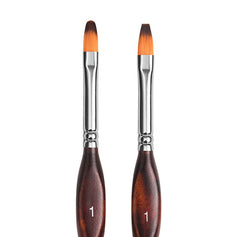
Flat Brushes
Flat brushes have a filament length that is more than twice as long as its width which means:
- Flats hold quite a lot of color
- Artists who like to lay down a generous amount of color all at once or would rather not reload frequently can rely on flats to carry color for quite a few strokes
- Flats offer a looser stroke
- The longer length of the filament means you have less control
- Flats generate a longer stroke
- The longer length lends itself to more expressive strokes
- Flats have more flexibility
- This shape allows you to apply plenty of pressure when you really want to push the paint into your canvas

Bright Brushes
Bright brushes have a filament length that is nearly equal to its width which means:
- Brights hold a modest amount of color
- For artists that don’t want to add too much color all at once, a bright brush is the perfect shape
- Brights provide excellent controllability
- You will have more control over your stroke, which can be a really good thing for new artists
- Short, quick strokes are much easier to achieve
- When compared to a flat, the bright shape makes a small stroke simple
- Scumble away!
- Brights are excellent scrubbing or scumbling brushes because the short filament keeps them stiff and allows you to get rough