
Introduction
Painting miniatures requires precision, control, and the right tools. Among them, your brush is arguably the most important. This guide breaks down what makes a brush truly great for miniature painting, how to choose the right size and type, and which brushes are worth buying in 2026.
What Makes a Brush the “Best for Miniatures”?
1.Tip Sharpness & Point Retention
When painting extremely small details such as eyelashes, pupils, or tiny highlights, you need a razor-sharp point. A dull or rounded tip leads to fuzzy lines and accidental smudging. Long-term point retention is equally important—miniature painting requires repetitive, high-precision work, and a brush that loses its point quickly will slow you down.
2.Brush Hair Material
Kolinsky Sable
- Exceptional point and edge control
- Naturally tapered, needle-like tip
- Retains shape even after heavy use
- Tight cuticle structure holds paint well and releases it smoothly
- Higher cost due to rare, premium natural hair
Squirrel Hair
- Moderate point-holding ability
- Becomes blunt and splayed with repeated use
- Very soft, porous fibers allow large paint capacity
- Prone to “mop” or “fan” shapes when wet
Synthetic Fibers
- Average point retention; tips may split over time
- Lower paint absorption; paint may bead or drip
- Highly durable and resistant to wear
- Affordable and easy to maintain
3.Spring / Backbone
(Spring = how the brush snaps back; Backbone = how much support the bristles provide)
- Kolinsky Sable: Medium-to-strong spring; flexible yet controlled. Slowly returns to shape after pressure, maintaining a sharp tip.
- Squirrel: Very soft, weak spring; collapses easily and lacks structural support.
- Synthetic: Strong spring, sometimes too strong. Snaps back quickly, which may flick paint unintentionally.
Common Miniature Brush Sizes
Brush sizes are represented by numbers—the smaller the number, the finer the tip.
| Size | Typical Use |
| #2 | Larger basecoats, broad blending, quick coverage |
| #1 |
Medium detail work, layering, smooth gradients |
| #0 |
Slightly wider lining, small-area basecoats, controlled washes |
| #00 |
Standard fine lining, small highlights, micro-blending |
| #000 |
Ultra-fine lining, tiny fills, miniature text/symbols |
Types of Brushes Used for Miniature Painting
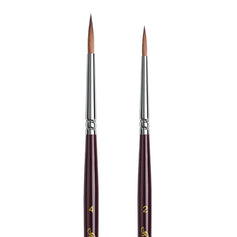
Round
A full-bodied, tapered tip—from thick belly to fine point. Ideal for basecoats and controlled blending on small areas.

Spear / Arrow Point
Long, needle-like point with tightly packed, short bristles. Perfect for precision tasks like pupils, insignias, and micro-markings.
Detail / Liner
Short, compact bristles with a thick base and a tiny sharp tip. Designed for extremely fine line work and intricate details.

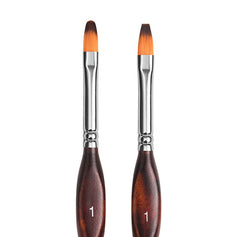
Flat
Rectangular, flat-edged bristles. Great for broad coverage, sharp-edged fills, or cleaning up straight edges.

Kolinsky vs Synthetic: Which Is Better?
Both have their place—Kolinsky for fine detail and smooth layering, synthetics for durability and budget-friendly versatility.
| Property | Konlinsky Sable | Synthetic(Nylon) |
| Point | Excellent(natural taper) | Weak(splits easily) |
| Detail Work | Superior, suitable for hair-thin lines | Better for general/base work |
| Paint Absorption | High, smooth,steady release | Low, tends to bead and drip |
| Paint Control | Very smooth, seamless blending | Less smooth, can streak |
| Spring/Backbone | Balanced, natural elasticity | Strong, sometimes too stiff |
| Solvent Resistance | Weak to oil/enamels | Good, but strong solvents may cause swelling |
| Durability | Moderate(natural wear) | High |
| Cost | High | Low |
Best Miniature Painting Brushes (2025 Recommendations)
High-End Choice: Premium Kolinsky Set
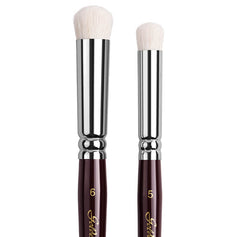
Kolinsky sable brushes deliver exceptional tip sharpness, point retention, and paint-holding capacity. They glide smoothly across the model, achieving crisp lines and effortless transitions. Paired with soft goat-hair drybrushes, they produce natural textures and smooth blends.

Budget Choice: Entry-Level Synthetic Set
High-quality nylon brushes offer reliable control and are easier to clean. With a wide range of tip sizes, they are suitable for both beginners and everyday practice. Extremely durable and low-maintenance.

Brush Care: Make Your Best Brushes Last Longer
Cleaning Steps
Step1 Rinse:Use lukewarm water (below 40°C) to remove surface paint.
Step2 Clean with Soap: Apply brush soap or a neutral cleaner. Gently swirl from base to tip, focusing on the ferrule where paint often accumulates.
Step3 Rinse Thoroughly: Rinse again. If the water is still cloudy, repeat until it runs clear.
Step4 Cheak the Tip: Pinch the bristles lightly—there should be no stiffness or residue.
Proper Drying & Storage
- Remove excess water: Press gently with a soft cloth.
- Reshape: Form the tip back into its original point; secure with a brush cap if available.
- Air dry naturally: Lay flat or hang with the tip downward in a cool, shaded, ventilated place.
- Maintain appropriate humidity in the brush storage area: Excessively dry or overly humid air can cause the wooden handle to swell or shrink, potentially loosening the metal ferrule and reducing the brush’s lifespan.
Here are 5 tips for cleaning acrylic paint brushes to help extend their lifespan.

Conlusion
Choosing the best brushes for miniature painting comes down to understanding brush sizes, shapes, materials, and your personal painting style. Whether you prefer the precision of Kolinsky sable or the affordability of synthetics, the right tool can transform your painting experience.
Experiment, explore, and find the combination that works best for you—and your miniatures will look better with every project.
Frequently Asked Questions (FAQ)
Q1: What is the difference between Konlinsky and sable brushes?
A1: “Sable” refers broadly to all mink-based hair brushes, covering many grades and sources.
“Kolinsky” is the highest-grade category, made specifically from the winter belly hair of male Siberian/Asian weasels.
Kolinsky brushes offer superior point retention, spring, and paint-holding ability. General sable brushes vary widely and are suited for mid-to-high quality general work.
Q2:What size Konlinsky brush is best for miniature painting?
A2: For most miniature painters, the best sizes are #0 to #2, with #00 or #000 for ultra-fine details.
- #0–#2: Everyday detail work, armor, faces, layering
- #00 / #000: Eyes, metallic edge highlights, micro-details
Choose based on your preferred level of detail and your miniature’s scale.
Q3: Are watercolor brushes good for miniatures?
A3: Yes. Many high-end watercolor brushes—especially Kolinsky sable—excel at miniature work because they offer:
- sharp tips
- excellent spring
- high paint capacity
Just avoid very soft mop-style brushes, which lack the control needed for fine miniature detail.